
Skip to content
Neundorfer 50 Year Anniversary Logo
Home Knowledge Base Theory of Operations: Collecting

Theory of Operations: Collecting

Introduction to ESPs

Collecting

Let’s stop here and reassess what’s taking place inside the precipitator. Gas molecules around the discharge electrode are positively ionized and generate an avalanche of free electrons. These free electrons race as fast as they can away from the strong negative field that surrounds the discharge electrode and get captured as they encounter gas molecules in the inter-electrode area. This creates negative gas ions that then accumulate on nearby PM and the net result is negatively charged particles that are repulsed by the negative electric field surrounding the DE and strongly attracted to the CE. This induces the negatively charge PM to migrate toward the grounded collection plate where it accumulates, and all of this happens in the blink of an eye.

Precipitation of Particulate Matter

The point when PM sticks to the CE and starts to form a layer is called precipitation. The chemistry definition of precipitation is œthe process of separating a substance from a solution as a solid. In the case of ESPs, PM matter is separated from the flue-gas solution by electrostatic attraction that causes it to precipitate onto the collection plate.

Neutralization & Clamping Forces

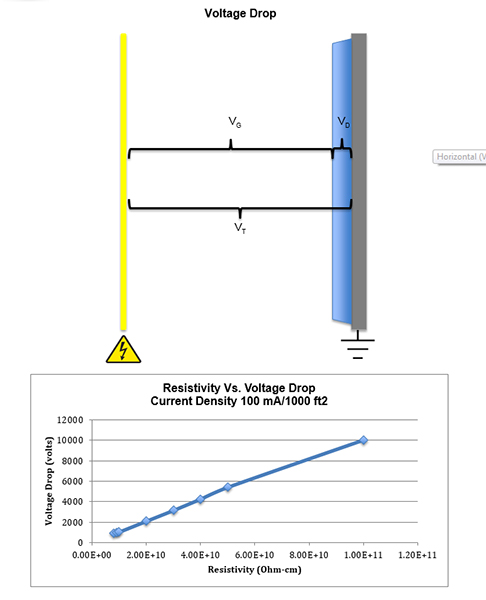
Once charged PM reaches the grounded CE, the charge on the particle is partially discharged and slowly leaked to the grounded collection plate. It is this retained charge that contributes to the inter-molecular adhesive and cohesive forces that holds the PM onto the CE. Adhesive forces cause the particles to physically hold on to each other because of their dissimilar surfaces. Newly arrived particles are held to the collected particles by cohesive forces; particles are attracted and held to each other molecularly. The accumulating dust layer is allowed to build up on the plate until a desired thickness is achieved and the particle removal cycle is initiated.

https://www.neundorfer.com/wp-content/uploads/2016/05/KB_ESP_Introduction_TheoryOfOperation_Collecting.jpg

From Our Optimized Insights

Latest Insights

  • News Article

    2025: A Year of Milestones, Momentum, and Gratitude

    As we reach the close of 2025, I want to take a moment to reflect on the progress we’ve made together during a year filled with meaningful achievements and important transitions. First, I’m proud to share that we completed another year with zero safety incidents. Safety is foundational to…

  • News Article

    Celebrating 50 Years of Neundorfer!

    This year marks a milestone: Neundorfer’s 50th Anniversary. For half a century, we’ve been driven by innovation, collaboration and a commitment to helping our partners solve complex challenges in smarter, more sustainable ways. In August, we gathered with employees, partners, and friends to celebrate this achievement. It was…

  • News Article

    2024 in Review: Success, Sustainability, and Milestones

    2024 in Review: Success, Sustainability, and Milestones As the year draws to a close, I want to take a moment to reflect on the successes we’ve achieved and the milestones we’ve reached together. This has been a remarkable year—one that saw us successfully complete numerous projects, welcome…